Have you ever stepped outside on a freezing January morning, turned your key or pressed the start button, and heard nothing but a sluggish click? That sinking feeling is familiar to millions of drivers every year. Winter weather is brutal on mechanical components, turning small oversights into expensive breakdowns.
Cold weather driving presents real dangers that extend beyond mere inconvenience. According to data from the Federal Highway Administration and the National Highway Traffic Safety Administration, more than 1,300 people die and over 116,000 suffer injuries annually in crashes on snowy, slushy, or icy pavement. On top of that, more than 131,000 police-reported crashes happen during active snow or sleet conditions every single year.
Emergency calls spike dramatically as soon as the first freeze arrives. AAA reports that dead batteries and flat or underinflated tires are consistently the top two reasons for winter roadside service calls.¹ When you prepare your vehicle ahead of time, you give yourself peace of mind and protect everyone sharing the road with you. Getting ready for winter does not require a mechanic degree, just some focused attention on tires, electrical systems, fluids, and emergency supplies.
The Foundation of Safety and Traction
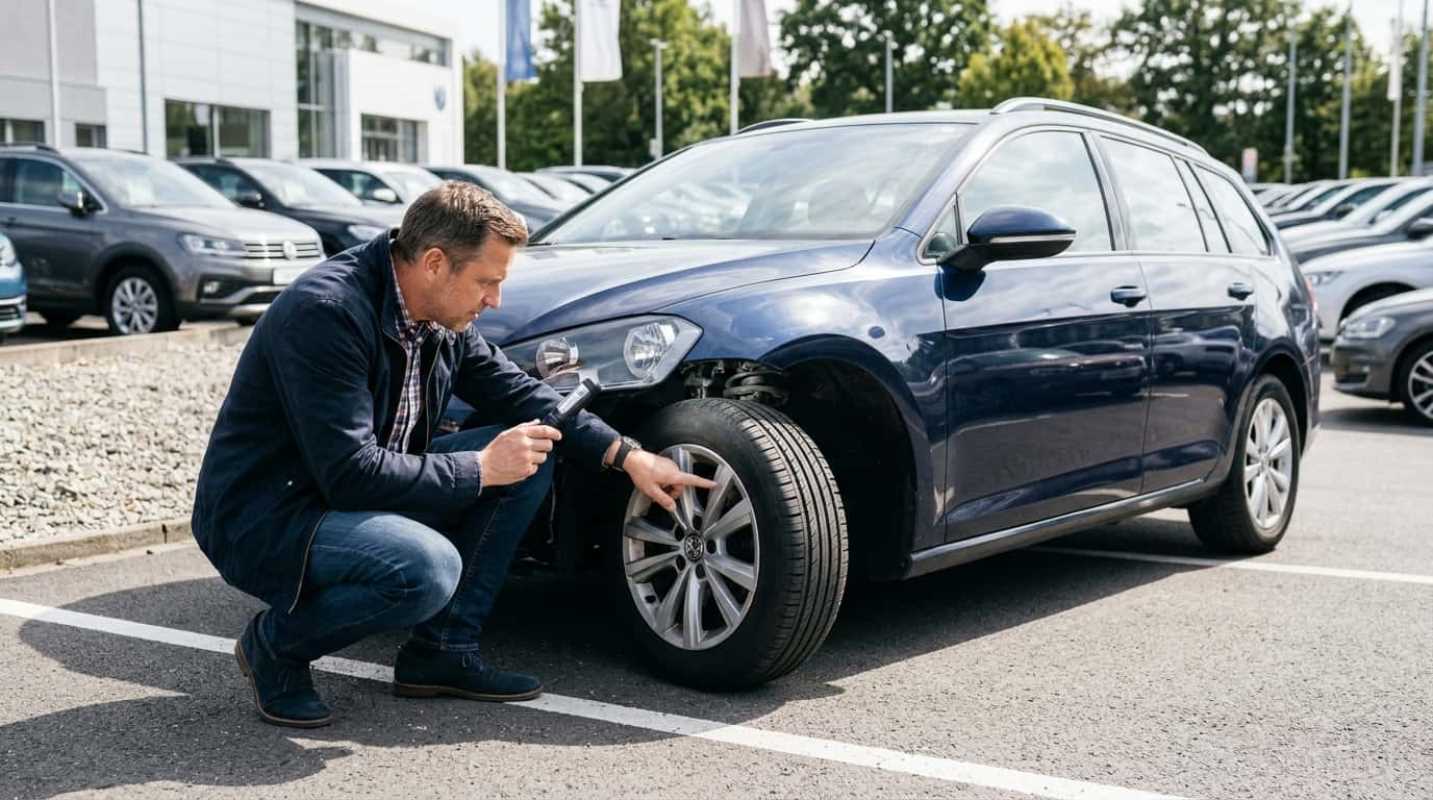
Tires are the only parts of your vehicle that actually touch the road. If your rubber cannot grip the surface, all the advanced safety systems in modern cars cannot save you from a slide. Many drivers assume all-season tires handle any weather condition, but that name is misleading.
Standard all-season rubber compound begins to stiffen at 45 degrees Fahrenheit. Below that threshold, the tread hardens like plastic and loses its ability to grip cold asphalt, even on completely dry pavement. Dedicated winter tires use specialized high-silica rubber compounds that stay pliable well below freezing temperatures. In snow tests conducted by Tire Rack at 25 miles per hour, vehicles with winter tires stopped in roughly 56 to 57 feet. The exact same vehicles equipped with all-season tires took 81 to 85 feet to stop, which adds nearly two full car lengths to your stopping distance.
Tread depth is equally important when slush builds up. Although the legal minimum across most states is 2/32 of an inch, your safety drops off sharply below 4/32 of an inch. For driving through snow and deep slush, you need at least 5/32 to 6/32 of an inch of tread to channel snow away from the contact patch.
Air pressure also drops rapidly as the thermometer falls. The general physics rule is simple: tires lose approximately 1 PSI for every 10-degree drop in outside temperature. If you set your tires to 35 PSI during a mild 65-degree afternoon and wake up to a 15-degree cold snap, your tires are suddenly 5 PSI low. Keep these maintenance habits in mind throughout the season:
• Tire pressure monitoring: check pressures weekly with a reliable digital gauge when tires are cold, meaning parked for at least three hours.
• Door jamb specifications: inflate your tires to the numbers listed on your driver door jamb placard, not the maximum number stamped on the tire sidewall.
• Quarter check: place a quarter upside down into your tread ribs, and if George Washington's head is exposed, replace the tire before winter storms arrive.
• Winter tire changeover: swap to tires stamped with the Three-Peak Mountain Snowflake symbol if your regional temperatures stay below 45 degrees for months.
Battery Health in Freezing Temperatures
Nothing ruins a freezing morning faster than a battery that refuses to turn over the engine. Winter creates a double problem for your electrical system. It reduces available chemical energy while simultaneously increasing mechanical resistance inside the engine block.
The numbers tell the story clearly. Research from the AAA Automotive Research Center shows that at 32 degrees Fahrenheit, a car battery loses around 35 percent of its cranking strength. When temperatures plunge to zero degrees, that capacity drops by 50 to 60 percent.² At the exact same time, your engine oil thickens, forcing the starter motor to pull between 30 and 100 percent more power just to rotate the crankshaft.
Here is an ironic truth: summer heat often deals the damage that kills your battery in January. Scorching summer temperatures accelerate internal corrosion and evaporate electrolyte fluid. You never notice this during warm months because the engine starts effortlessly. Once the deep freeze arrives, the weakened battery simply collapses under the heavy electrical load.
A fully charged battery will not freeze until temperatures drop past 76 degrees below zero. But a weak or discharged battery resting below 12.0 volts can freeze solid right at 32 degrees, warping the internal plates and cracking the plastic case. Protect your charging system by following these steps.
• Professional load test: have an auto shop or parts store test your cold-cranking amps and alternator output if your battery is more than three years old.
• Terminal cleaning: scrub away powdery white corrosion from the posts with a wire brush and a mixture of baking soda and water.
• Highway runs: avoid strings of short trips under 15 minutes, which drain the battery without giving the alternator enough time to recharge it.
• Smart maintainer: connect a smart trickle charger if your vehicle sits parked outside for multiple consecutive freezing days.
Keeping Your Engine and Visibility Clear with Proper Fluids
Fluids protect the mechanical heart of your car and keep your view of the road clear. When sub-zero weather hits, standard fluids can gel, freeze, or fail entirely.
Your engine cooling system requires a precise mixture of antifreeze and distilled water. A standard 50/50 mix protects your engine block down to 34 degrees below zero. If someone topped off your reservoir with straight water during the summer, that dilution raises the freezing point. Freezing coolant expands rapidly, which can crack your radiator or your engine block.
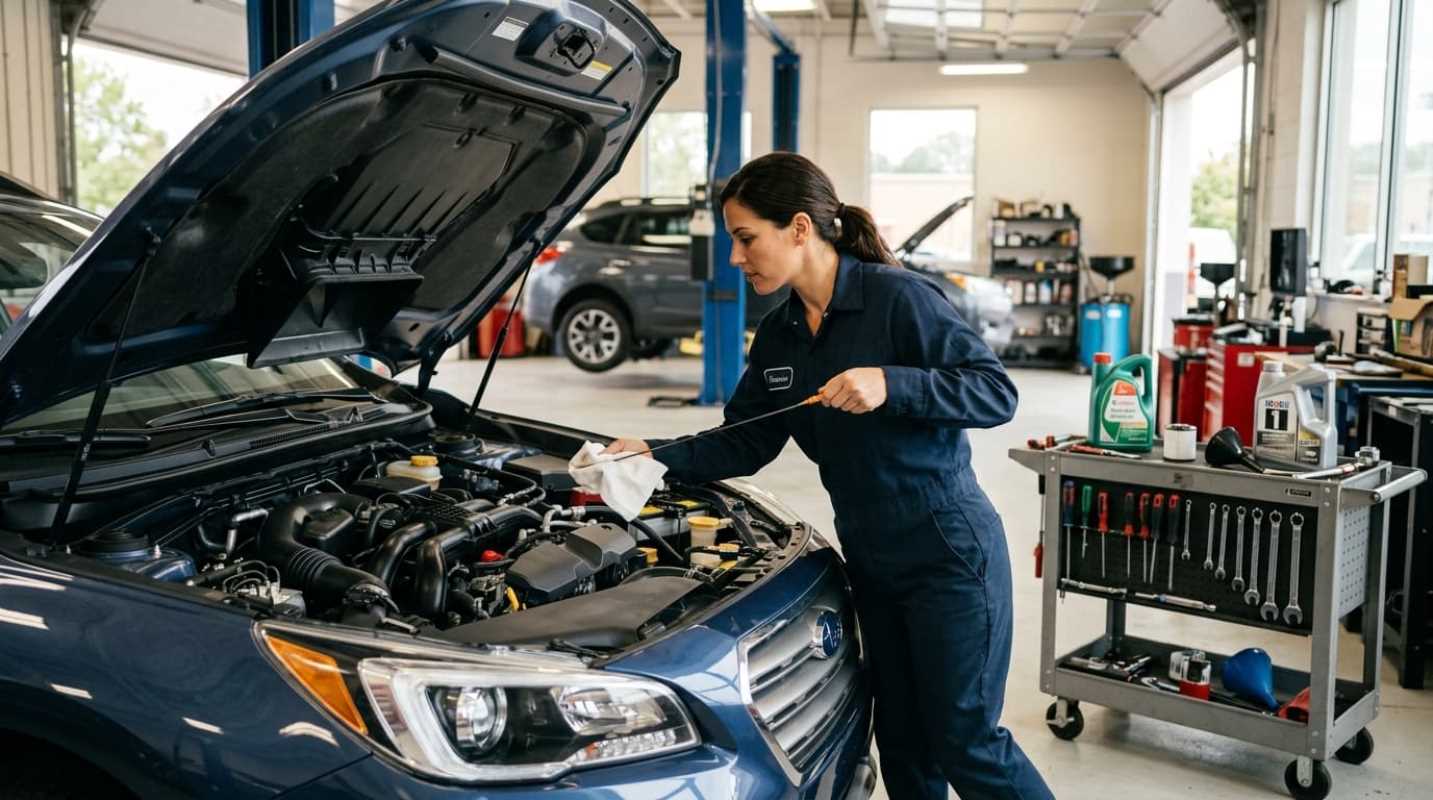
Engine oil also needs attention before winter arrives. Look in your owner's manual for the recommended winter viscosity rating, such as 0W-20 or 5W-30. The number before the "W" represents winter flow characteristics. Modern synthetic base oils flow smoothly even at 30 degrees below zero, which drastically reduces internal engine wear during cold startups.
Never underestimate your windshield washer system. Summer washer fluid is mostly water and light soap, which freezes into solid ice inside the spray nozzles. Spraying summer fluid onto a freezing windshield at highway speeds will instantly create a blinding sheet of ice. Always switch to a dedicated de-icer fluid rated down to minus 20 or minus 40 degrees.
Keep your gas tank at least half full during the cold months.³ Empty space inside the fuel tank allows warm, moist air to condense on the tank walls. This water sinks to the bottom, where it can freeze inside fuel lines and leave you stranded. Keeping plenty of gas in the tank also gives you hours of engine heat if you ever get stuck in a snowdrift.
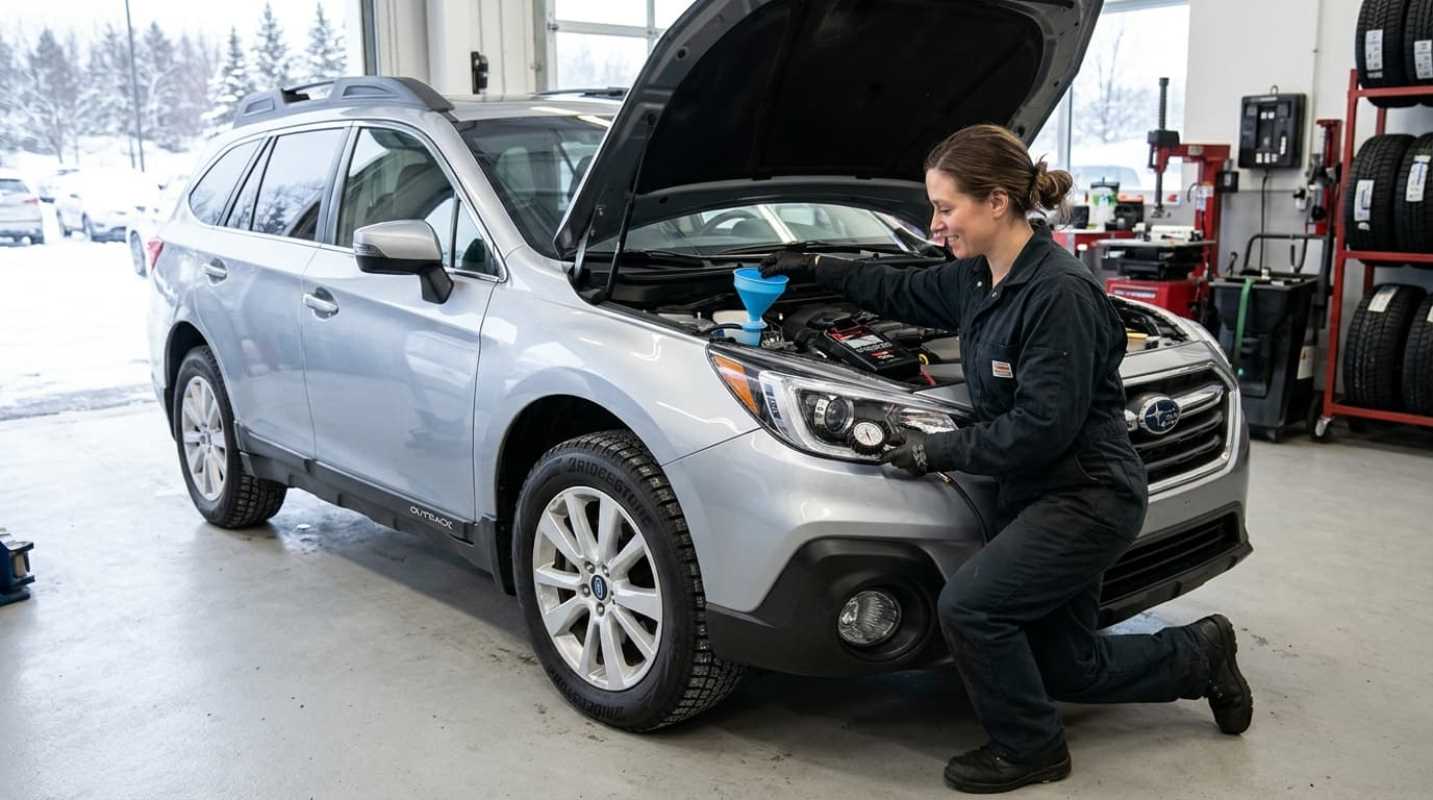
Having the right winter maintenance supplies on hand makes cold weather driving much less stressful.
Visibility and Emergency Kits for the Road Ahead
Driving in winter means shorter daylight hours, heavy precipitation, and sudden squalls. If you cannot see the road or other drivers cannot see you, accidents happen fast. Standard wiper blades often fail because ice packs into their open metal frames, preventing the rubber from contacting the glass. Replace them with beam-style or enclosed winter blades that resist ice buildup.
Inspect all exterior lighting, including headlights, taillights, turn signals, and fog lights. Clouded or oxidized headlight lenses cut light output by more than half, so clean them up before dark winter commutes begin. Also, check your cabin air filter. A clogged cabin filter restricts airflow to your front defroster, leaving your windshield fogged up when you need clear vision the most.
Despite the clear risks, preparedness is shockingly low. A national AAA survey discovered that 40 percent of American motorists carry no emergency kit in their vehicle during the winter months. Building a reliable kit takes very little effort and can save your life if you slide off the road during a storm.
Keep these needed supplies in your trunk all winter:
• Jump starter: pack a portable lithium-ion jump starter pack or a set of heavy-duty four-gauge jumper cables.
• Traction aids: carry a small bag of sand, non-clumping clay cat litter, or composite traction boards to wedge under slipping tires.
• Snow tools: keep a sturdy ice scraper with a brass or composite blade, a telescoping snow brush, and a compact folding metal shovel.
• Warmth and comfort: store a wool blanket, a reflective space blanket, insulated winter gloves, a warm hat, and chemical hand warmers.
• Power and light: pack an external phone power bank with charging cables and a high-lumen LED headlamp with extra lithium batteries.
Preparing your vehicle for winter weather gives you total confidence behind the wheel. Take an afternoon to check your tires, test your battery, and top off your winter fluids. When the next blizzard rolls into town, you will be driving safely while other motorists wait on the shoulder for a tow truck.
Sources:
1. AAA Warns Drivers to Prep Vehicles and Plan Ahead for Winter Weather Safety
https://newsroom.acg.aaa.com/aaa-warns-drivers-to-prep-vehicles-and-plan-ahead-for-winter-weather-safety/
2. Tips for Maintaining Car Battery in Cold Weather
https://www.ace.aaa.com/automotive/advocacy/tips-for-maintaining-car-battery-in-cold-weather.html
3. AAA: Maintaining Battery, Tires Is Key to Preparing Your Car for Winter
https://www.wkar.org/wkar-news/2021-11-25/aaa-maintaining-battery-tires-is-key-to-preparing-your-car-for-winter