Gas prices are always a headache. It's 2026, and we're still watching the numbers climb at the pump with a sense of dread. Fuel remains one of the highest ongoing costs of owning a car. So it makes sense that we're all looking for ways to get more miles out of every drop.
The average fuel economy for new vehicles reached a record high of 27.2 MPG, according to the 2025 EPA Automotive Trends Report.¹ But here's the catch: that window sticker is just a laboratory estimate. Your actual mileage depends almost entirely on you.
You don't need a brand-new hybrid or an expensive electric vehicle to save money. Making a few simple adjustments to your daily drive and maintenance routine can boost your fuel efficiency by up to 40%.² Let's look at the habits that actually move the needle.
Mastering the Art of Smooth Acceleration and Deceleration
Every time you slam on the gas pedal, you dump excess fuel into the engine cylinders. Think of it like throwing dry wood onto a campfire all at once. Most of it just goes up in smoke without doing useful work.
Aggressive driving, like rapid acceleration and hard braking, lowers your fuel economy by 15% to 30% on the highway, according to researchers at the Oak Ridge National Laboratory.³ In stop-and-go city traffic, it's even worse, dragging your efficiency down by 10% to 40%.³
So what does this mean for your wallet? You're throwing away $0.25 to $1.00 for every single gallon of gas you buy.⁴
If you want to keep that money, you've got to change how you interact with your pedals. Here's how to do it
• Accelerate like there's an egg under your foot: Imagine trying to keep that egg intact. Give yourself about five seconds to accelerate from a stop to 15 mph.
• Read the traffic ahead: Don't just look at the bumper in front of you. Look three or four cars ahead. If you see a red light or brake lights glowing in the distance, take your foot off the gas immediately.
• Coast to a stop: Let your vehicle's momentum do the work. Coasting is completely free. Hard braking just converts your expensive forward momentum into useless heat on your brake pads.
The Science of Speed: Finding the Sweet Spot
Have you ever noticed how your car feels like it's working much harder once you cross a certain speed on the highway? That's not your imagination. It's physics.
Vehicles are designed to cut through the air, but aerodynamic drag increases exponentially as you speed up. Think of it like walking through water. The faster you try to move, the harder the water pushes back.
For most cars, fuel efficiency peaks between 50 and 60 mph. Once you cross that 50 mph threshold, your engine has to work much harder to push through the air.
For every 5 mph you drive over 50 mph, you pay the financial equivalent of an extra $0.24 to $0.30 per gallon of gas.⁴ If you lower your highway speed by just 5 to 10 mph, you can improve your overall fuel economy by up to 14%.⁵
To keep your speed steady, make cruise control your best friend on long, flat highway stretches. It prevents the natural, accidental speed fluctuations that waste fuel.
Just remember to turn it off when you hit hilly terrain. Cruise control systems often panic on steep climbs, downshifting aggressively and revving the engine to maintain an exact speed, which actually burns more fuel than a human driver gently losing a little speed on the way up.
Vehicle Maintenance: The Hidden Fuel-Efficient Driving Tips
We often separate driving habits from maintenance, but they're deeply connected. A neglected car fights against your best efforts to drive efficiently.
These simple maintenance checks keep your car running lean:
• Check your tire pressure monthly: Under-inflated tires are a silent fuel killer. When your tires are low on air, they sag, creating a larger contact patch with the road. This increases rolling resistance. Your engine has to work harder just to keep the wheels turning. Gas mileage drops by 0.2% to 0.3% for every 1 PSI drop in all four tires.⁴ Keeping them inflated to the pressure listed on your driver's side door jamb can boost your efficiency by up to 3.3%.⁴
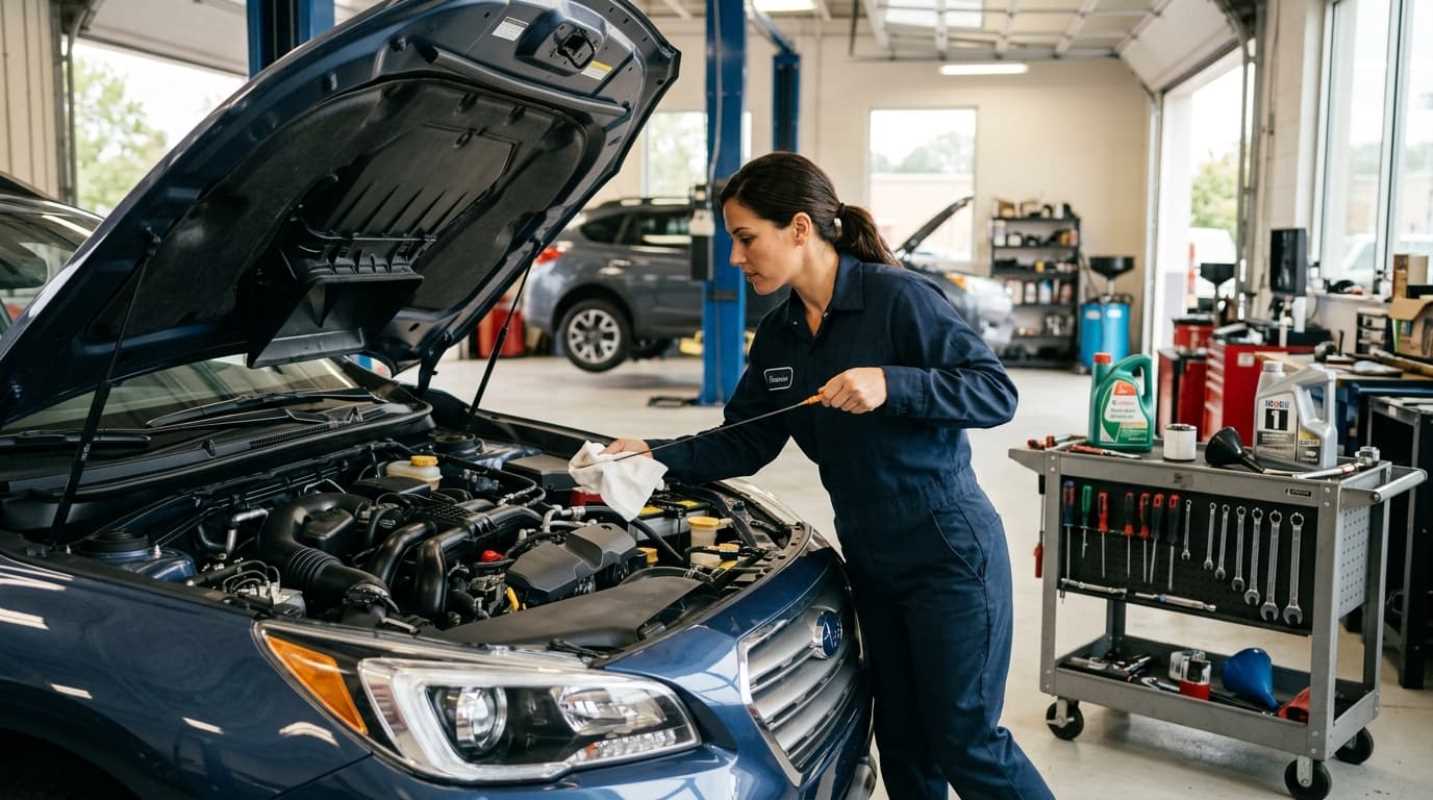
• Use the right motor oil: Engine friction is a constant battle. Using the manufacturer-recommended grade of motor oil can improve your gas mileage by 1% to 2%.⁴ When you buy oil, look for the API donut mark labeled "Energy Conserving" or "Resource Conserving". These oils contain special friction-reducing additives.
• Don't ignore the check engine light: If your dashboard is glowing, your car might be running in a default "safe" mode that burns way too much fuel. A faulty oxygen sensor, like, can trick your engine into running a rich fuel mixture. Fixing a serious engine issue like this can boost your mileage by up to 40%.⁴
Strategic Driving Habits to Save on Fuel
Beyond how you physically handle the pedals, your daily approach plays a massive role in your fuel bill.
• Stop idling: An idling car gets exactly zero miles per gallon. Idling can burn a quarter to a half-gallon of fuel per hour.⁴ Modern fuel-injected engines don't need to warm up in the winter anymore. They only need a few seconds for the oil to circulate before they're ready to roll. If you're going to be stopped for more than 10 to 30 seconds, turn the engine off.
• Declutter your trunk: Carrying extra weight forces your engine to work harder during acceleration. An extra 100 pounds in your vehicle reduces fuel economy by 1% to 2%.⁴
• Think about aerodynamics: That rooftop cargo box or bicycle rack is a massive wind sail. A rooftop cargo box can reduce your fuel economy by 2% to 8% in the city, and a staggering 6% to 17% on the highway.⁴ Take it off when you're not using it.
• Plan your trips: A cold engine burns more fuel than a warm one. Combining your errands into one continuous trip keeps your engine at its best operating temperature, saving you both time and gas.
Shifting Your Mindset for Long-Term Savings
At the end of the day, saving fuel requires a minor shift in perspective rather than expensive gadgets or drastic lifestyle changes. When you start viewing every aggressive acceleration, every speeding sprint, and every neglected tire check as direct withdrawals from your bank account, your habits will change naturally.
These small adjustments don't just protect your wallet. They also reduce wear and tear on your brakes, transmission, and tires, saving you even more money on long-term repairs. Plus, burning less fuel means you're doing your part to lower emissions.
Next time you get behind the wheel, take a deep breath, ease off the gas, and watch your savings grow.
Sources:
1. Highlights of the Automotive Trends Report
https://www.epa.gov/automotive-trends/highlights-automotive-trends-report
2. How to Save on Gas in 2025: Maintenance Hacks That Improve Fuel Efficiency
https://gmservicema.com/how-to-save-on-gas-in-2025-maintenance-hacks-that-improve-fuel-efficiency/
3. Sensible driving saves more gas than drivers think
https://www.ornl.gov/news/sensible-driving-saves-more-gas-drivers-think
4. Consumer Guide to Fuel Economy Tips
https://www.energy.gov/sites/default/files/2021-12/ES-ConsumerGuide-Fuel-Economy-Tips-508.pdf
5. Increase Gas Mileage Driving Tips
https://www.acg.aaa.com/connect/blogs/4c/auto/increase-gas-mileage-driving-tips