Have you ever turned your key or pressed the start button and immediately felt that sinking sensation in your stomach? Maybe it is a faint rhythmic tapping from under the hood that was not there yesterday. Maybe your car hesitates for two full seconds before jerking into gear. Whatever the symptom, your instinct is usually right. Vehicles are complex machines, but they rarely suffer sudden catastrophic breakdowns without dropping hints first. They communicate through sound, smell, and handling long before they leave you stranded on the shoulder of a highway.
Keeping an older vehicle running reliably makes more financial sense right now than ever. The average age of cars on the road has climbed past 12.8 years, meaning millions of drivers are understanding the territory where big-ticket repairs pop up.¹ With replacement cars carrying record price tags and steep monthly payments, knowing how to interpret your car's warning signs will save you thousands of dollars in secondary damage.
Warning Signs Under the Hood Beyond Dashboard Lights
Your dashboard warning lights are your first line of defense, but you have to know how to read between the lines. A steady Check Engine light usually means an emissions sensor or a loose gas cap needs attention. You should get it scanned soon, but you do not need to pull over immediately.
A flashing Check Engine light is an entirely different emergency. A flashing light signals an active, severe engine misfire. When that happens, unburned fuel dumps straight into the exhaust system, where it can overheat and melt your catalytic converter in just a few miles. Replacing a melted catalytic converter often costs between $1,500 and $3,000. If that light flashes, pull over and shut the car off.
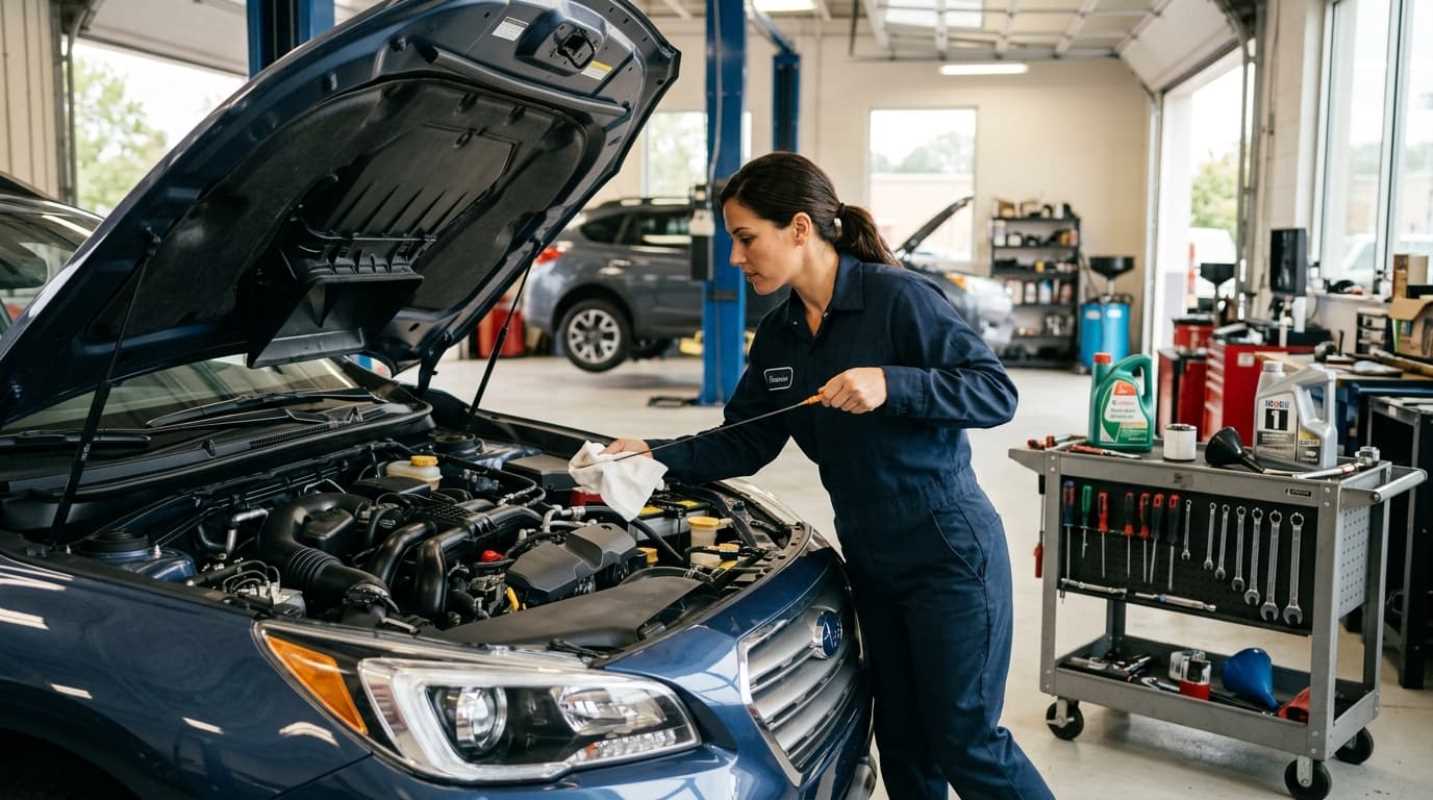
Beyond the dashboard, your fluids tell the real story of what is happening inside the engine and transmission. Pull your dipstick and examine the oil
• Milky oil: If your engine oil looks like a chocolate milkshake or frothy peanut butter, coolant is mixing with your oil. That is almost always the sign of a blown head gasket or a cracked engine block. Driving with contaminated oil will wipe out your engine bearings within minutes.
• Burnt transmission fluid: Healthy automatic transmission fluid is bright or translucent red. If your fluid is dark brown or black and smells like burnt toast, the internal friction clutches inside your gearbox are slipping and burning up.
• Exhaust smoke colors: White, sweet-smelling smoke billows out when coolant burns inside the combustion chamber. Blue or gray smoke means worn piston rings or valve seals are letting oil burn. Heavy black smoke points to fuel system failure.
The Sensory Check for Unusual Sounds, Smells, and Vibrations
You do not need a mechanical degree to spot mechanical trouble. You just need to pay attention to your senses during your daily commute.
Deep mechanical knocks are the most dangerous sound an engine can make. A heavy, dull, metallic knocking sound that speeds up as you rev the engine is usually rod knock, which happens when the bearings between the crankshaft and connecting rods wear out. Ignore that sound, and the rod can punch a hole straight through the side of your engine block, turning a repairable engine into scrap metal. A lighter, rapid clattering from the top of the engine often means a stretched timing chain. In modern interference engines, a skipped timing chain lets the pistons smash directly into the valves, destroying the motor instantly.
Unusual smells provide equally direct clues
• Sweet maple syrup smell: This scent usually indicates an external coolant leak from your radiator, water pump, or heater core.
• Acrid burning chemical smell: Burning electrical insulation or overheated transmission fluid has a sharp, biting scent that you will smell through the air vents.
• Sulfur or rotten eggs: This odor points to a clogged, failing catalytic converter that can no longer process exhaust gases properly.
Vibrations also tell a clear tale. If your steering wheel shakes violently while braking, your brake rotors are warped. If your vehicle shudders under light acceleration or feels like you are driving over rumble strips at 40 miles per hour, your transmission torque converter or internal clutch pack is likely failing.
Performance Drops When Drivability Becomes a Safety Issue
When your car stops responding predictably to your inputs, minor wear has crossed the line into a major mechanical failure.
Transmission slippage is one of the clearest warnings that a large repair bill is looming. You press the accelerator, your tachometer revs high, but the car barely creeps forward before slamming into gear. You might also notice a long hesitation when shifting from Park into Drive or Reverse.² Internal pressure loss, worn bands, or failing electronic solenoids cause these delays, and continuing to drive on a slipping transmission will ruin the unit completely.
A sudden, sharp drop in your gas mileage is another red flag. If your fuel economy plunges by 20 or 30 percent over two consecutive fill-ups, your powertrain is working under extreme stress. Clogged catalytic converters, failing fuel injectors, or severe sensor failures force your engine computer to dump excess fuel just to keep the vehicle moving.
Rough idling, frequent stalling at red lights, or difficulty starting up after the car is warm are not quirks you should live with. These symptoms signal severe compression loss, failing fuel delivery systems, or deep electrical faults that can cut power unexpectedly in heavy traffic.
The Cost-Benefit Analysis of Repairing Versus Replacing
Facing an estimate for a new transmission or an engine rebuild is stressful. When a quote lands between $4,000 and $8,000, you have to run the numbers with a cold head rather than an emotional attachment to the car.
Start with the 50 percent rule. If a single repair quote costs more than half of what the vehicle is worth in fair condition, spending that money is rarely a wise move.³ If your sedan has a market value of $5,000, putting a $3,800 transmission into it simply does not make mathematical sense.
Next, do the 12-month payment comparison. A major $2,400 repair spread across an entire year equals roughly $200 per month. If your vehicle has a solid maintenance history and that single repair gives you two or three more years of dependable driving, paying the repair bill is far cheaper than taking on a $700 monthly payment for a newer car.
Walk away if safety is compromised. Structural frame rot that compromises suspension mounts, recurring electrical harness failures, or repair bills that arrive every 60 days mean the vehicle has reached the end of its useful life.
Top Recommendations for Handling Major Repairs
• Get a second opinion: Never authorize a multi-thousand-dollar repair based on a single quote. Independent specialty shops often charge far less than dealership service departments for major component rebuilds.
• Ask about remanufactured parts: If an engine or transmission replacement is necessary, ask your mechanic about remanufactured units with nationwide warranties rather than brand-new factory parts.
• Check for active recalls and service bulletins: Manufacturers occasionally extend warranties or cover repair costs for known transmission or engine defects, even on older models.
Taking Control of Your Vehicle's Future
The difference between a manageable repair bill and a total mechanical catastrophe usually comes down to how quickly you react.
Cars give plenty of warnings before major components fail. When you pay attention to the faint smells, subtle gear slips, and unusual dashboard alerts, you keep the upper hand. You give yourself time to shop around for honest quotes, source remanufactured parts, or plan your next vehicle purchase on your own schedule instead of being forced into an emergency decision. Treat early symptoms seriously, protect your investment, and you will stay ahead of breakdowns every time.
Sources:
1. U.S. Vehicle Age Rises Again to 12.8 Years in 2025, According to S&P Global Mobility
https://press.spglobal.com/2025-05-21-U-S-Vehicle-Age-Rises-Again-to-12-8-Years-in-2025,-According-to-S-P-Global-Mobility
2. Transmission Slipping: Signs and Cost
https://fixxr.repair/blog/transmission-slipping-signs-and-cost
3. Repair vs Replace: When Car Is No Longer Worth Fixing
https://trustedlocalauto.com/blog/repair-vs-replace-when-car-no-longer-worth-fixing
*This article on Everyknown is for informational and educational purposes only. Readers are encouraged to consult qualified professionals and verify details with official sources before making decisions. This content does not constitute professional advice.*