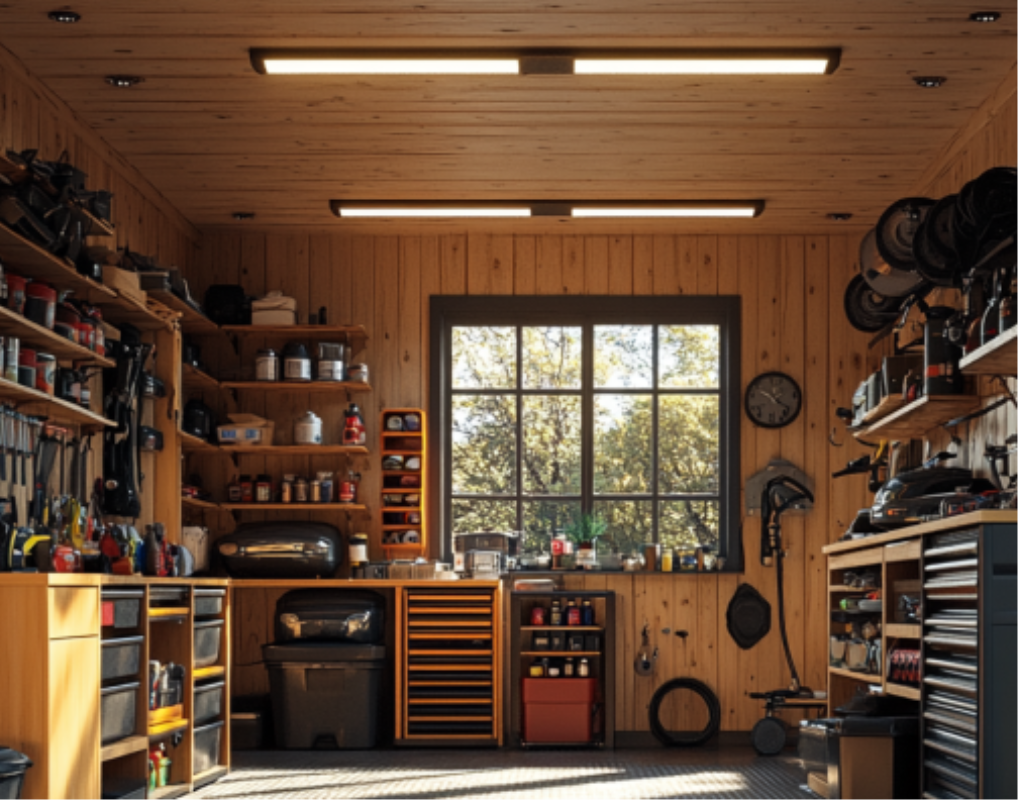
For many homeowners, the garage is a place of incredible potential that slowly turns into a chaotic storage dump. What starts as a convenient spot to park a car or store a few lawn tools often morphs into a graveyard of forgotten cardboard boxes, outgrown sporting equipment, paint cans, and half-finished DIY projects. Over time, the mess grows so overwhelming that parking a vehicle inside becomes impossible.
Disorganization in the garage does more than just swallow up usable square footage. It causes unnecessary stress, wastes time when you are searching for tools, and can even create serious safety hazards like tripping risks or fire hazards. The good news is that reclaiming your garage does not require a costly full-scale renovation. By following a clear plan and using smart, modern storage solutions, you can transform your garage into a clean, functional, and organized space.
Phase 1: Prep Work – Sorting and Decluttering
Before you buy a single shelf, rack, or plastic bin, you must face an important truth: you cannot organize clutter. Trying to organize items you no longer need or use only moves the mess around. True organization starts with a thorough purge.
To make the process manageable, set aside a weekend afternoon and clear out space on your driveway. Pick one section of the garage at a time and apply the Three-Zone Sorting Method:
- Keep: Items you use regularly, seasonal gear in good condition, essential tools, and items that strictly belong in the garage.
- Donate or Sell: Functional items you have not touched in over a year, duplicate tools, outgrown toys, or sports gear.
- Toss or Recycle: Broken items beyond repair, expired chemicals, rusted hardware, and water-damaged cardboard boxes.
When deciding whether to keep an item, ask yourself a few honest questions: Have I used this in the last 12 months? Would I buy this again today if I didn't own it? Is it worth the floor space it consumes? If the answer is no, it is time to let it go.
Maximizing Vertical and Overhead Space
Once you have narrowed down what you are keeping, look at your garage with fresh eyes. The biggest mistake people make is relying solely on floor space. The secret to a spacious garage lies in using the walls and ceiling.
1. Overhead Storage Racks
The ceiling is often the most underutilized area in any garage. Installing heavy-duty ceiling-mounted wire racks takes advantage of the empty space above your garage door or along the upper perimeter. These racks are ideal for lightweight, bulky, or seasonal items that you only need once or twice a year, such as holiday light displays, artificial trees, camping gear, and extra coolers.
2. Slatwall and Wall-Mounted Track Systems
Walls offer flexible real estate. Instead of relying on individual nails or weak hooks, consider installing heavy-duty horizontal track systems or full slatwall panels. These systems allow you to attach adjustable hooks, baskets, and brackets. They are strong enough to lift heavy objects—such as ladders, weed trimmers, leaf blowers, and bicycles—completely off the concrete floor, leaving clear walkways and extra vehicle room.
3. Pegboards for Everyday Hand Tools
For smaller hand tools like hammers, screwdrivers, pliers, and tape measures, a wall-mounted pegboard positioned above a workbench is ideal. By tracing the outline of each tool or arranging hooks neatly, you build a visual station where every tool has an obvious home. This makes grabbing what you need simple and instantly highlights if a tool was not returned after a project.
Smart Floor-Level Solutions and Zoned Layouts
After taking full advantage of your walls and ceiling, turn your attention back to the ground. Anything placed on the floor should be mobile, modular, and organized into specific functional zones.
Heavy-Duty Modular Shelving
Invest in sturdy, adjustable steel or heavy-duty resin shelving units rather than cheap wooden shelves that can warp or attract pests. Place heavy plastic storage totes on the lower shelves and lighter items higher up. Always opt for clear, stackable totes over opaque or cardboard boxes—clear totes allow you to see the contents inside without having to unstack and open every single lid.
Creating Garage Zones
Organizing by "zones" keeps similar items together and ensures smooth traffic flow through the garage:
- The Transition Zone: Located right next to the house entry door. Use this space for items you grab daily, such as work boots, jackets, dog leashes, or sports backpacks.
- The High-Frequency Zone: Keep frequently used tools, lawn mowers, gardening supplies, and trash cans easily accessible near the main garage door so you do not have to trek across the room to reach them.
- The Low-Frequency Zone: Place long-term storage, bulk paper goods, and seasonal items toward the back corners or top shelves.
Mobile Workstations
If you enjoy woodworking, car maintenance, or home repair projects, a rolling workbench with lockable casters is a great investment. It provides a solid surface for working when you need it and can easily be wheeled against a wall or out of the way when you need to park your car.
Safety, Labeling, and Long-Term Maintenance
Setting up your smart storage system is a huge accomplishment, but keeping it organized over time requires a few continuous habits.
Safety and Lockable Storage
Garages often store items that can be hazardous to children and pets. Lawn fertilizers, weed killers, motor oil, paint thinners, and sharp power tools should be stored inside a locked metal cabinet or placed high on elevated shelves well out of reach. Additionally, keep a working fire extinguisher mounted near the garage door exit for safety.
Clear Labeling
Never underestimate the power of a label maker or a thick permanent marker. Label every tote, bin, and drawer clearly on multiple sides. When every family member knows exactly where an item belongs, they are far more likely to put it back after use.
Bi-Annual Quick Audits
Organizing a garage is not a one-time event; it is an ongoing habit. Schedule 15-minute quick cleanups twice a year—ideally during spring and fall transitions. Use these brief sessions to sweep the floors, check for unwanted clutter accumulation, swap out seasonal gear, and return stray items to their proper zones.
Reclaiming Your Space
A cluttered garage can feel like a daunting burden, but breaking the project down into manageable steps makes it completely achievable. By clearing out what you no longer use, taking advantage of vertical and overhead space, and arranging your belongings into intuitive zones, you can transform a chaotic dumping ground into an efficient, safe, and organized extension of your home. Best of all, you will finally have room to park your car where it belongs.